
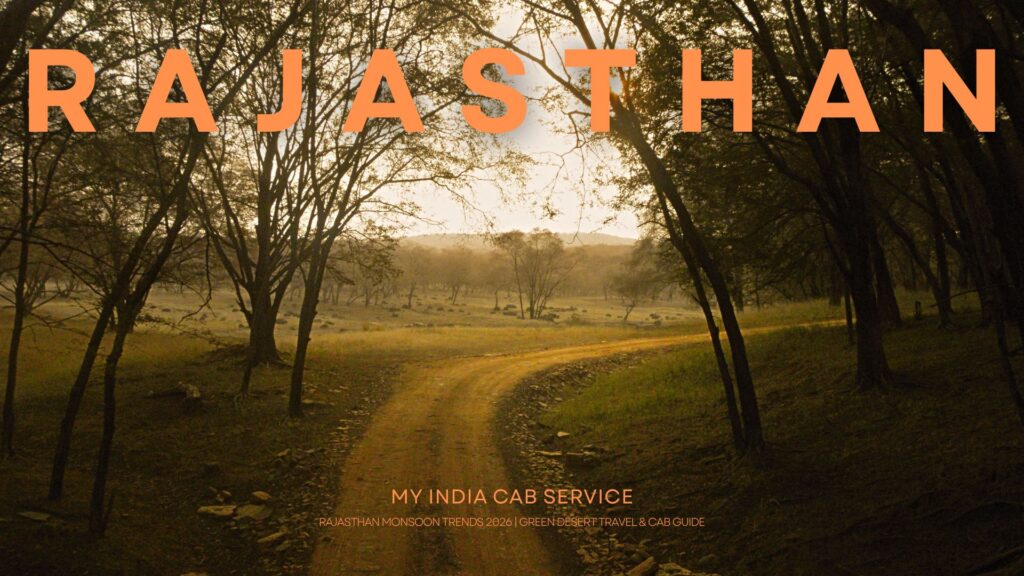
If you talk to anyone about traveling to Rajasthan, they’ll usually tell you to wait until November. They’ll talk about the blistering summer or picture endless miles of dry, sun-baked sand. But this June, something completely unprecedented is happening.
According to recent data from the India Meteorological Department (IMD), Rajasthan has recorded a staggering 154% excess rainfall than normal by mid-June. Driven by intense, back-to-back western disturbances, the parched desert landscape is rewriting climate records.
The result? The arid hills of the Marwar and Mewar regions have suddenly transformed into a lush, vibrant green oasis. Roads that are normally dusty are now lined with streaming waterfalls, and historic forts are sitting amidst misty, emerald forests.
Social media is exploding with clips of this “Green Desert” phenomenon, and it has triggered a massive, off-season travel boom. If you’re looking to experience an entirely different, romantic side of Rajasthan without the winter crowds, right now is the time to plan a monsoon road trip.
The Best “Green Desert” Routes for 2026
1. Jodhpur to Kumbhalgarh & Udaipur
This is the ultimate route to see the landscape shift in real-time. As you leave the urban density of Jodhpur, the highway stretches toward the Aravalli Range. By the time you reach the detours for Kumbhalgarh Fort, you are driving through winding ghats wrapped in thick fog.
The massive walls of Kumbhalgarh look entirely different when they are slick with rain and surrounded by green valleys. From there, dropping down into Udaipur—the city of lakes—is breathtaking. The lakes are completely full, and the rooftop views are spectacular.
2. The Cloud Climb to Mount Abu
If you want true respite from the humidity, heading up to Rajasthan’s only hill station is the trend of the season. The 28-kilometer winding climb up the mountain is currently a paradise of misty curves and seasonal waterfalls cascading down the rock faces. Nakki Lake is pristine, and the temperature drops to a crisp, cool breeze that feels entirely uncharacteristic of the desert state.
The Logistical Reality: Why the Right Ride Changes Everything
As magical as a green desert sounds, monsoon driving in Rajasthan demands a lot of respect. The state’s infrastructure is built to withstand extreme dry heat, meaning sudden, heavy downpours can create unique road challenges.
Before you pack your bags and head out, here are three critical safety and comfort factors you need to account for:
Watch Out for Flash Pooling & Aquaplaning
Because the desert ground can be hard and compacted, heavy rain doesn’t absorb instantly. It pools on the asphalt. If you are driving a lightweight hatchback or a standard sedan with worn-down tires, hitting a patch of standing water at 80 km/h can cause aquaplaning—where your car loses contact with the road. You need a vehicle with high ground clearance, a heavy frame, and an experienced driver who knows how to handle wet terrain.
The Hill Driving Shift
The roads up to Mount Abu or through the Kumbhalgarh valleys feature steep inclines and sharp hairpin turns. When these surfaces become slick with rain and visibility drops due to mountain fog, standard city driving rules don’t apply. You need a professional chauffeur who understands engine braking and mountain navigation to keep your family safe.
Group Coordination
Monsoon travel is best experienced together, but rainy weather means keeping track of multiple moving pieces becomes twice as stressful. If you are planning a multi-family or group getaway to catch the green hills, trying to manage a convoy of separate cars is a logistical headache.
Bundling everyone into a single, high-performance vehicle like aluxury outstation Tempo Travellerkeeps the group united, ensures ample space for wet umbrellas and bags, and cuts down on your toll and parking expenses across the state.
Planning Your Monsoon Itinerary Successfully
- Avoid the Midday Bottlenecks: Start your road trips early—ideally by 7:30 AM. This ensures you navigate the highway stretches before the heavy afternoon showers typically set in, giving you clear views of the misty valleys.
- Balance the Urban and the Wild: Use Jodhpur as your central starting basecamp. You can easily spend a day executing a seamless 24-hour Jodhpur city cab itinerary to check off Mehrangarh and Mandore Gardens while they look fresh and rain-washed, before launching into the deeper Aravalli countryside.
- Keep Your Pricing Transparent: Off-season travel means great hotel deals, but don’t let unverified on-street taxi operators overcharge you for “monsoon surcharges.” Always verify your costs against a standardized, upfront Jodhpur taxi fare price list so you know exactly what you should be paying.
Chase the Green Hills with My India Cab Service
The 2026 green desert boom is a reminder that nature loves to surprise us. To truly enjoy the misty forts, roaring waterfalls, and emerald hills of this rare Rajasthani season, you shouldn’t be stressing behind the steering wheel or squinting through a foggy windshield.
At My India Cab Service, we operate a premium fleet of thoroughly inspected, high-clearance MUVs and SUVs—including the Toyota Innova Crysta and Maruti Suzuki Ertiga—driven by local, professional chauffeurs who know Rajasthan’s roads in every single weather condition. Whether you need a quick vehicle for local sightseeing and day trips from Jodhpur or a multi-day outstation coach to the mountains, we provide flat, transparent rates with zero hidden charges.
Experience the historic green desert in comfort:
- Call / WhatsApp: +91 9828364070
- Direct Email: [email protected]
- Website: https://myindiacabservice.com
- Head Office: House No. 01, Shiv Mandir Road, Behind Krishna Mandir, Ratanada, Jodhpur, Rajasthan 342001