
Ola and Uber do not reliably serve Bikaner. App-based aggregators operate on thin margins in smaller cities and withdraw when demand does not justify their infrastructure costs, leaving travellers stranded or forced into inflated surge pricing during peak hours.
Bikaner sits on the edge of India’s app-taxi map. Unlike Delhi or Mumbai, where ride-hailing dominates street hails, Bikaner’s economy and geography make it an unattractive market for Ola and Uber. The city is smaller, journeys are longer and spread thinner, and the driver supply needed to maintain app reliability is harder to build. Result: erratic availability, cancelled rides, and fares that spike without warning.
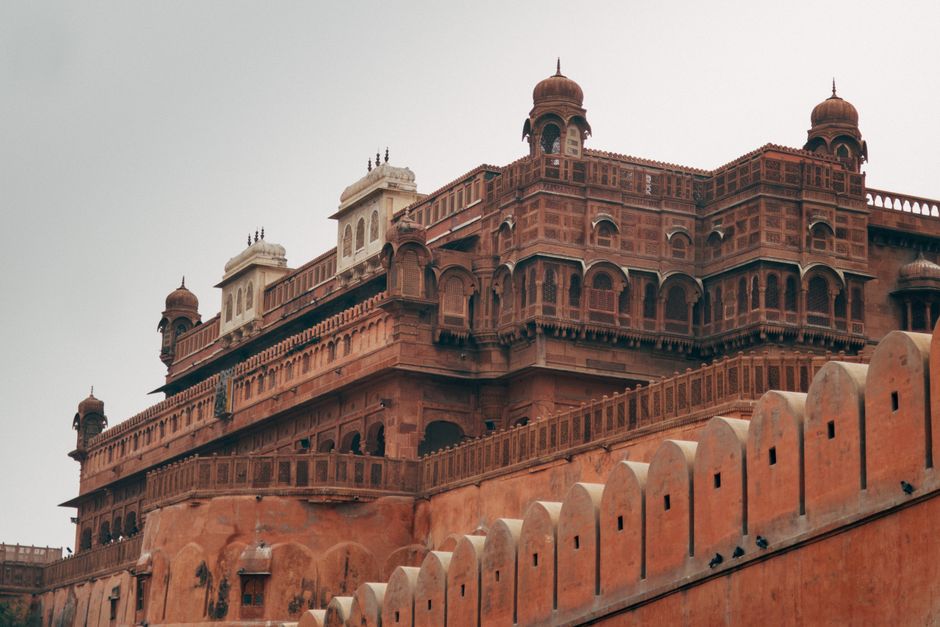
If you are arriving at Bikaner airport or railway station, or planning to visit Junagarh Fort, the 18th-century havelis, or make an outstation trip to Jaisalmer or Jodhpur, a pre-booked local taxi service is not a convenience—it is the practical choice.
Why App Taxis Fail in Smaller Rajasthan Cities
App-based services rely on density. Drivers need a steady flow of requests to earn enough per shift. Passengers expect short wait times and nearby vehicles. In cities of 600,000 people spread across an area the size of Delhi, neither condition holds. A driver in central Bikaner can spend 20 minutes between fares. Passengers in the suburbs wait 15 minutes for a car to arrive, only to see surge pricing kick in during the lunch hour or evening.
Ola and Uber have both tested Bikaner and scaled back. You will find the apps online or in app stores, but opening them often returns “No cabs available” or shows a single car 8 kilometres away. During monsoon or peak tourist season, a few drivers briefly activate. The moment demand drops, they switch off or move to Jodhpur, where the throughput is better.
Local taxi operators, by contrast, maintain fixed fleets and drivers year-round because they serve residents as well as tourists. They cannot afford to vanish when business slows.
What You Get With a Local Cab Service Instead
A booked local taxi arrives on time. Your driver knows the route to Junagarh Fort, the best havelis to visit, which restaurants close on Mondays, and where to park without hassle. There are no surprises on the fare: you agree a price before the journey. No surge pricing. No cancellations because demand spiked elsewhere.
For outstation trips—to Jaisalmer, Jodhpur, or Mount Abu—local operators charge by the kilometre or offer multi-day packages. You see the full cost upfront. Toll, parking, and driver allowance are listed separately so you know exactly what you are paying.
Local drivers also double as informal guides. They speak Hindi, sometimes English, and can tell you which lane in the old city hides the best street food, or why a particular haveli is architecturally rare. That knowledge is worth more than a 5-star rating from someone who visited once.
Bikaner Taxi Rate Card: Sedans, SUVs and Group Travel
Local fares in Bikaner vary by vehicle type and duration. For a half-day or full-day city tour—covering Junagarh Fort, Laxmi Niwas Palace, Lalgarh Palace, and the old city havelis—expect to pay between ₹2,500 and ₹5,000 depending on whether you choose a sedan or a larger SUV.
Outstation travel works differently. Rather than a fixed journey price, you pay a per-kilometre rate. A sedan typically costs ₹12 per kilometre, an Innova Crysta ₹18 per kilometre. Most operators calculate a standard 300-kilometre day. If your trip is shorter, you pay for the actual distance. Driver allowance (usually ₹300 per day) and tolls are extra.
For groups of 8 to 13 people, a 12-seater air-conditioned tempo traveller costs between ₹6,000 and ₹7,000 for a local city tour. Larger coaches (35 or 45 seats) suit group pilgrimages or corporate outings.
Parking charges depend on where you go. A four-hour visit to Junagarh Fort includes parking in the main lot. A full day in the old city might rack up two or three separate parking fees, usually ₹50 to ₹200 per site—not huge, but worth knowing.
One-Way Drops: From Bikaner to Jodhpur or Jaisalmer
If you are not doing a round trip, many local operators offer one-way fares. The Bikaner-to-Jodhpur drop is about 240 kilometres. A sedan costs roughly ₹5,000 to ₹5,500 one-way; an Innova Crysta ₹7,500 to ₹8,500. Driver allowance (₹300) applies because the driver must return to base empty.
Bikaner to Jaisalmer is similar distance and similar rates. A sedan runs ₹5,000 to ₹5,500. The route crosses open desert; confirm that parking is included and what happens if you need the driver to wait.
One-way drops make sense if you are moving between cities over a few days. Booking a round trip from Bikaner to Jaisalmer with an overnight stop costs more per day but spreads the driver allowance across two journeys, often working out cheaper overall.
Multi-Day Packages: Bikaner to Jaisalmer, Jodhpur and Back
Many travellers use Bikaner as a starting point for a 2–3 day loop through the Thar. A typical itinerary: Bikaner to Jaisalmer (overnight), then to Sam Dunes for sunset, back to Jaisalmer the next morning, and either return to Bikaner or continue to Jodhpur.
Packages for these trips are usually quoted per vehicle for the full duration. A sedan for 3 days (2 nights) might run ₹12,000 to ₹14,000 total. An SUV, ₹18,000 to ₹22,000. Driver allowance (typically ₹900 for the package) is added on top. Toll and parking are still extra.
The advantage of a package is simplicity: one price, one driver, no negotiation per leg. The driver manages your route, knows where to refuel, and can recommend stops. If you are confident about your itinerary beforehand, a package saves time and mental effort.
Hidden Costs to Ask About
When you enquire about a fare, always confirm what is included and what is not. The base fare covers the vehicle, driver, and fuel. Toll taxes—India has many toll plazas on highways between Bikaner, Jaisalmer, and Jodhpur—are almost always charged separately at actual cost. You will not be overcharged, but you will not see that line until the trip ends.
Parking can add up. A four-hour city tour might include one parking fee. A full day with multiple monuments can be two or three. Ask your operator to estimate. Most are transparent; some bundle parking into the day rate.
Driver allowance (the daily fee for the driver’s accommodation and meals on multi-day trips) is separate from the per-kilometre or daily rate. It typically runs ₹300 per day for local trips, ₹900 for 2–3 day packages.
If you need a guide beyond the driver—someone who speaks English fluently and can deliver detailed historical commentary at Junagarh Fort—that costs extra, usually ₹1,000 to ₹1,500 per day depending on language.
Booking a Local Cab: What to Expect
Most local operators do not have the slick booking interface of Ola or Uber. You call or email, give your dates, vehicle preference, and destination. They confirm availability and quote a fare. You pay a deposit (often 20–50% of the total) to secure the booking, or sometimes the full amount upfront if it is a short trip.
Pay by bank transfer, UPI, or cash on collection. No credit card fees; no mystery charges added after the ride ends. The operator sends a driver confirmation with name and phone number a day or two before your trip. Call your driver the morning of pickup to confirm timing.
Most drivers arrive 10–15 minutes early. They know the traffic, know the routes, and have no reason to rush you. If you want to stop for chai or a photo, they wait. If you change your mind about an itinerary mid-trip, they adapt (though changes that add significant distance may incur extra charges).
Comparing Cost: Local Taxi vs. App
On paper, Ola or Uber from Bikaner airport to your hotel might look cheaper: ₹400–600 versus ₹800–1,200 for a local taxi. But that assumes an Ola car actually shows up. If no driver accepts your request after five minutes, surge pricing kicks in and the app fare doubles. Or you cancel and wait another ten minutes. By then you have lost the price advantage and most of your patience.
For outstation trips, the math heavily favours a local operator. An Ola or Uber one-way from Bikaner to Jodhpur will estimate ₹8,000–12,000 with surge pricing during peak hours. A local operator charges ₹5,500–8,500, the fare is fixed, and the driver gets you there safely without the stress of a meter running in real time.
For a three-day loop (Bikaner–Jaisalmer–Sam Dunes–Jodhpur), Ola would require booking and cancelling multiple segments, hoping for driver availability each time. A local package gives you one driver for three days, no app anxiety, and a person who can answer questions about what you are seeing.
Reliability in Remote Areas
If your trip includes Sam Dunes (two hours from Jaisalmer), Longewala (four hours towards the border), or smaller villages, app taxis simply do not operate. A local Bikaner operator sends a driver and vehicle suited to the terrain. You get there. You get back. No surprise cancellations mid-desert.
Similarly, if you are a solo female traveller or a family with young children, booking with a local operator means you can speak to them about driver selection, vehicle cleanliness, and safety measures. You are not handed a randomly matched stranger from an algorithm. You are matched with a person the operator knows and has vouched for.
Bikaner’s charm lies in its havelis, its camel culture, and its slower pace. App taxis belong to the cities trying to move faster. A local taxi operator understands that you came here precisely to move slower, and their model is built around that.
Booking a cab for this trip
We run this route regularly with clean, air-conditioned cars and experienced local drivers. Tell us your dates and we will quote you a fixed fare.
Call us on +919828364070, message us on WhatsApp or Jodhpur to Bikaner Taxi Service.